(10)-small.png)
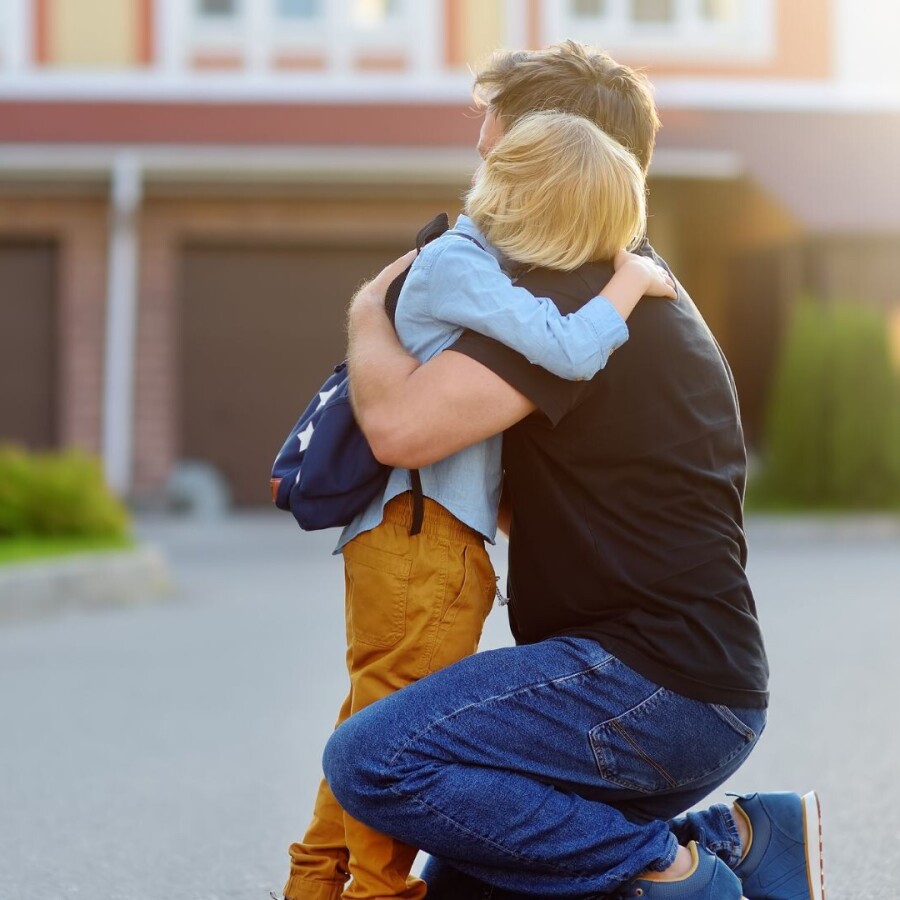
Why many men want to be different fathers than their children
Many men reach a point where they say to themselves, "I want to be a different father." Sometimes this comes even before the child is born. Other times it appears when they hold their son or daughter in their arms for the first time. And sometimes it is felt later - in small everyday situations, when a man suddenly sees how easily he can repeat something old that he himself did not want to carry within himself.
The desire to be a different father rarely comes out of nowhere. It is often born from a man's personal history as a son. From what he received. From what he lacked. From the way he was looked at, heard, or left alone. Some men grew up with fathers who were strict, silent, or emotionally distant. Others lived with the feeling that the father was there more as a function than as a close person. Still others carried a lack of attention, recognition, support, or real conversation.
That is why many men today do not simply want to be “like their father.” They want to be closer, more aware, more present, and more human. They want their children to grow up not only with order and responsibilities, but also with a sense of connection. They want to not pass on the silence, the distance, the rigidity without closeness, or the lack of emotional contact that they themselves experienced.
In the Bulgarian reality, this desire is particularly strong. Many men grew up in families where the father was a symbol of order, work and responsibility, but not always of closeness. Older generations often did not have a language for feelings, vulnerability and open presence. For them, fatherhood was mainly associated with provision, authority and discipline. Today's man, however, lives in a different time. He is expected not only to work and take on responsibility, but also to participate more actively, more personally and more emotionally in his child's life.
This is a big internal task. Because it is not enough to just want to be different. You also need to understand what you bring from your own experience, what is activated in you when things get difficult, and what patterns come to the surface precisely in the most tense moments. Sometimes a man wants to be a calm, patient and present father, but in a moment of tension he suddenly hears his father's voice within himself. Or he feels the same coldness, the same irritability, the same silence. And then he understands that old patterns do not change only with desire, but with awareness and work.
Being a different father doesn't mean blaming your own. It means taking an honest look at what you've been through and what you want to change. Admitting that there are things you don't want to repeat. Seeing that this doesn't make you ungrateful, but responsible. Because a mature man is not one who simply copies the past, but one who has the courage to choose what to keep and what to cut.
Many men want to be different fathers precisely because they feel how important a father's presence is. They want their children to grow up not only with certainty, but also with trust. Not only with rules, but also with emotional contact. Not only with authority, but also with the feeling that their father is someone they can reach out to.
This desire is not just a personal choice. It is a sign that something in male maturation is changing. That more and more men don't just want to be "strong" in the old way, but to be aware, present, and connected. To be fathers who not only provide life, but also truly participate in it.
And perhaps this is precisely where one of the most important changes lies today - when a man stops seeing fatherhood as just an obligation and starts living it as a relationship. Then he doesn't just become a different father. He also starts becoming a different person.